
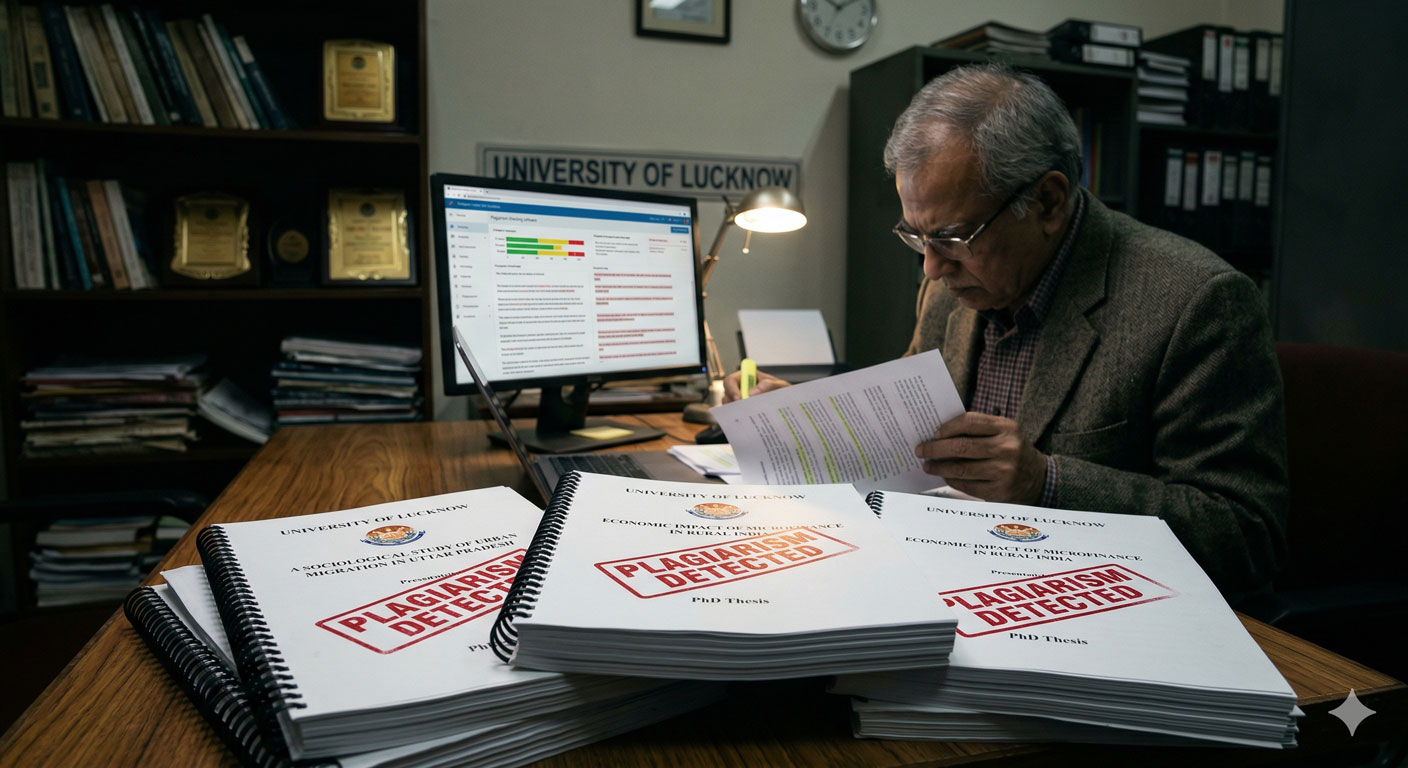
Lucknow University (LU) recently uncovered extensive plagiarism in PhD theses submitted early this year. Over 95% of submissions flagged issues via advanced detection software.
Detection Details
In January and February 2026, 121 PhD theses across disciplines were checked at LU’s Tagore library using DrillBit software. This tool identifies copied content and AI-generated text by scanning against global databases of journals, books, and prior research. Out of these, 116 theses (about 96%) showed 20-50% similarity, far exceeding LU’s limit of under 5% or 180 words for proper citations.
Scholars from 2019-2022 batches submitted these after completing their work. Flagged theses are returned for revisions to ensure originality before approval.
Role of AI Tools
DrillBit detected AI-assisted writing because chatbots like those generating content draw from existing research, creating detectable patterns. University officials noted this as a key factor, with plagiarism levels indicating heavy reliance on such tools rather than original analysis.
A senior arts faculty professor highlighted that these checks favor genuine researchers who invest time in traditional methods over AI shortcuts.
Broader Context
This incident echoes wider concerns in Indian academia. The University Grants Commission (UGC) has rejected similar AI-copied theses at institutions like Babasaheb Bhimrao Ambedkar Bihar University, enforcing over 40% similarity as unacceptable.
Earlier in 2026, LU PhD scholars reported glitches in DrillBit, claiming it sometimes misflagged original work, but recent cases confirm high plagiarism rates.
Implications for Research
These findings underscore the need for stricter AI oversight in higher education. Universities are tightening protocols, urging scholars to prioritize authentic research to uphold academic integrity.