
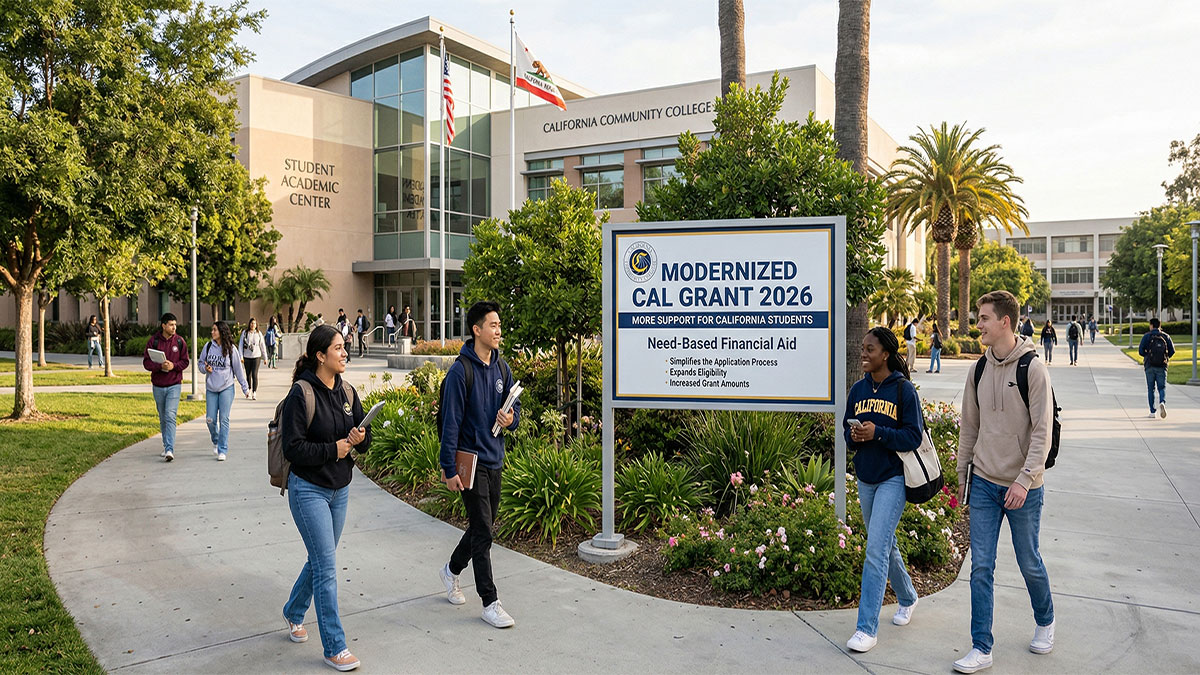
Sacramento, March, 2026 – California lawmakers have taken a major step toward modernizing the state’s flagship financial aid program, the Cal Grant, with a package of reforms designed to make it more responsive to today’s students’ needs. The updated framework aims to simplify eligibility, expand support to more community college learners, and better align aid with rising tuition and living costs, especially for low‑ and middle‑income Californians pursuing higher education.
Under the proposed changes, the Cal Grant program will shift from a largely enrollment‑based formula to one that more closely reflects actual financial need, including housing, transportation, and childcare expenses. Lawmakers are also working to eliminate long‑standing barriers that have excluded many undocumented students, foster youth, and adult learners from the full benefits of the program. The overhaul would streamline the application process by integrating state data with the federal Free Application for Federal Student Aid (FAFSA) and California Dream Act forms, reducing paperwork and confusion for families.
California’s Legislative Analyst’s Office estimates that the modernization could add tens of thousands of new recipients, particularly at community colleges and among students from rural and underserved regions. The reforms also call for increased Cal Grant amounts for high‑need students attending public universities and colleges, as well as new funding for students pursuing high‑demand fields such as nursing, teaching, and advanced manufacturing.
Advocates for student aid say the changes would strengthen California’s competitive edge in higher education, following recent national trends that prioritize need‑based aid over merit‑only grants. “This is about making college a real possibility for working‑class families, not just a promise,” said one higher‑education policy expert in Sacramento. If fully implemented, the modernized Cal Grant program is expected to roll out in phases starting in the 2027–28 academic year, contingent on final budget approvals.